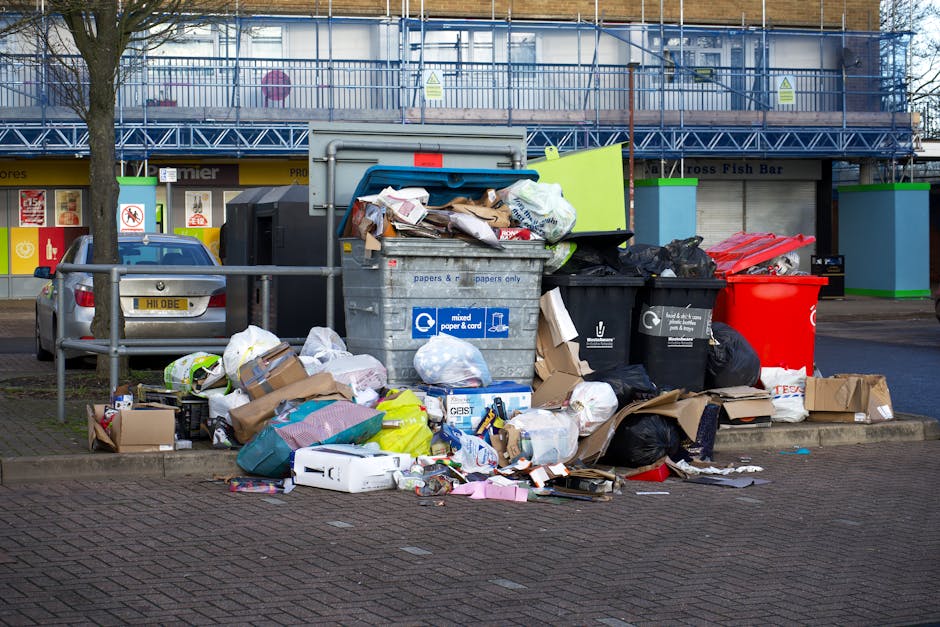
Rubbish removal near Seven Kings station what to know

If you are sorting a clear-out, a DIY job, or a pile of builder's debris, rubbish removal near Seven Kings station can be a lot simpler than people expect. The catch? Only if you know what to check before you book. Access, loading time, waste type, permits, and disposal rules all matter more than most people realise. And near a busy station, those details matter even more.
This guide explains the practical side of local rubbish clearance in plain English. You will learn how the service usually works, when it makes sense to choose rubbish removal instead of a skip, what can affect price and timing, and how to avoid the annoying little mistakes that turn a simple job into a headache. Let's face it, no one wants bags sitting outside longer than they need to.
- Why it matters
- How it works
- Key benefits
- Who it is for
- Step-by-step guidance
- Expert tips
- Common mistakes to avoid
- Tools, resources and recommendations
- Law, compliance and best practice
- Options and comparison
- Real-world example
- Practical checklist
- Conclusion
- Frequently asked questions
Why Rubbish removal near Seven Kings station what to know Matters
Seven Kings station sits in a part of east London where space can be tight, parking can be awkward, and residential streets can fill up quickly with everyday traffic. That changes how waste collection needs to be handled. A good rubbish removal service is not just about picking things up; it is about doing it without blocking access, upsetting neighbours, or leaving you with waste that has not been handled properly.
For households, landlords, tradespeople, and local businesses, the main value is straightforward: fast clearance with less disruption. But there is a second layer here. In a busy area near public transport, people often need a solution that fits around narrow driveways, shared access, or limited waiting space. If you are near Seven Kings station, that practical side becomes part of the decision, not just an afterthought.
Another reason this matters is waste type. A bag of old clothes is one thing. Broken tiles, appliances, office paper, mattresses, and plasterboard are another. The wrong handling can lead to extra charges, delays, or disposal problems. If you are unsure what can go in a load, it helps to check the relevant guidance first, including what can go in a skip and the company's recycling and sustainability information. Even when you are not hiring a skip, those pages give a useful sense of what waste streams need attention.
Expert summary: Near Seven Kings station, the best rubbish removal option is usually the one that matches your access, your waste type, and how quickly you need the space cleared. Speed matters, yes, but so does getting the job done legally and without fuss.
How Rubbish removal near Seven Kings station what to know Works
In practical terms, rubbish removal is a collection service where a team comes to your property, loads the waste, and takes it away for sorting and disposal. You do not need to fill a skip yourself, and you do not need to keep a container outside for days. That makes it a neat solution when you have mixed waste, limited room, or an urgent deadline.
The process usually starts with a quick description of what you need removed. A good provider will want to know roughly how much rubbish you have, whether it is bagged or loose, whether there are stairs or awkward access points, and whether any items are heavy or specialist. Be clear here. Really clear. It saves everyone time.
Depending on the job, the team may carry waste from inside a house, from a garden, from an office, or from the kerbside. For awkward spaces, some customers choose a man and van style collection. For faster loading where waste is already stacked outside, a more direct collection can work better. If your access is tight and the waste is heavy, it may be worth looking at grab hire services or grab lorry hire, especially for bulky material or larger volumes.
For same-day or urgent jobs, some customers prefer same-day skip hire or same-day skip hire-style turnaround where available. If you need the waste gone almost immediately and there is room to load it there and then, wait and load skip hire can also be a sensible fit. The right choice depends on what is being removed and how your street actually works on the day. Not theory. The real street.
Key Benefits and Practical Advantages
People usually choose rubbish removal for convenience, but the benefits go beyond convenience alone.
- Less lifting and sorting on your side: The team does the loading, which can save your back and your weekend.
- Better for tight spaces: Near station roads and terraced streets, a collection vehicle may be easier than finding space for a skip.
- Quicker turnaround: If you want the clutter gone in one visit, rubbish removal is often the most direct route.
- Useful for mixed loads: House clear-outs often include a mix of bags, broken furniture, and random bits from the shed. A removal team is often better suited to that than a simple container drop.
- Less visible clutter: There is no skip sitting outside for days, which can help with kerb appeal and neighbour relations.
- More flexible for access issues: If parking is awkward, a service that collects from the property can be easier to coordinate.
A lot of people also find that proper rubbish removal reduces decision fatigue. Instead of wondering whether you need one trip or two, which skip size to pick, or whether a permit is required, you can book the service that fits the job. If you want a deeper look at container-based options, skip hire and skip sizes and prices are worth comparing.
Who This Is For and When It Makes Sense
Rubbish removal near Seven Kings station suits a few different situations. Some are obvious, others less so.
Homeowners and tenants: If you are clearing out a loft, replacing furniture, or tackling the aftermath of moving home, a removal service can be the simplest option. It is especially useful if you do not want a skip outside or if you live on a street with no easy parking.
Landlords and letting agents: End-of-tenancy clearances often involve a mix of general waste, old furniture, and sometimes a few unpleasant surprises. A fast, clean collection helps you reset the property without dragging the job out. For larger property clearances, house clearance and garage and loft clearance are also useful to compare.
Tradespeople: Builders, decorators, kitchen fitters, and small contractors often need a practical way to clear packaging, timber offcuts, old fixtures, and rubble. In those cases, builders waste removal, builders skip hire, or construction waste clearance may be more appropriate, depending on volume and access.
Businesses: Offices, shops, and small commercial units often need discreet disposal of furniture, files, packaging, or tired equipment. If that sounds familiar, office clearance and commercial skip hire are worth a look.
Garden and outdoor projects: Soil, branches, hedge cuttings, broken fencing, and old planters can build up fast after a weekend of work. In those cases, garden waste removal or muck away services may be a better match than general rubbish removal.
Step-by-Step Guidance
If you want a smooth job, do not wing it. A little prep makes the whole thing calmer.
- Sort the waste into broad groups. Keep general rubbish separate from anything sharp, wet, heavy, electrical, or potentially hazardous.
- Check access. Measure gates, stairwells, hallways, and any narrow turning points. A collection team will thank you for this later.
- Take a quick photo. This is especially helpful if you are comparing quotes. A couple of clear images can be more useful than a long description.
- Identify special items. Fridges, mattresses, sofas, confidential paperwork, and electronics may need dedicated handling. If needed, review fridge and appliance removal, mattress and sofa disposal, or confidential shredding.
- Be honest about volume. Underestimating the load is one of the quickest ways to make the day awkward. If in doubt, over-prepare rather than understate.
- Ask how the waste will be handled. A decent provider should be able to explain sorting and recycling in plain language.
- Confirm timing and parking. Near Seven Kings station, traffic and parking can shift quickly, so a narrow booking window is better than vague arrangements.
Here is the thing: a tidy plan makes the load-out feel almost boring. And boring is good. Boring means no surprises, no last-minute dash, and no "where do we put this now?" moment on the pavement.
Expert Tips for Better Results
After enough waste clearances, a few patterns become obvious.
- Book around your actual access, not your ideal one. If the vehicle cannot stop directly outside, say so. You will get a more realistic plan.
- Keep a small "do not remove" zone. It sounds obvious, but people often forget keys, documents, chargers, or bits they meant to keep.
- Flatten what you can. Cardboard boxes and empty packaging take up more space than they should. Breaking them down saves a surprising amount of room.
- Separate reusable items early. If there are items you can donate, sell, or reuse, pull them out before the collection team arrives.
- Think about noise. If you are clearing early in the morning or late in the day, metal scraping and heavy bags can carry. A little timing awareness goes a long way in a residential patch.
- Use the right service for the right waste. Builders' waste, garden waste, and household junk all behave differently. Matching the service to the material usually saves money and hassle.
If the job is likely to keep changing as you sort through cupboards or a loft, it may be better to use a flexible option such as man and van rather than committing too early to a fixed container size. That's the sort of small choice that makes the day easier.
Common Mistakes to Avoid
Most problems with rubbish removal are avoidable. Unfortunately, they are also common.
- Mixing restricted items into a general load. Electricals, liquids, chemicals, and certain sharp or contaminated items can complicate disposal. If something feels borderline, ask first.
- Guessing the amount. People often say "just a small pile" and then reveal half a garage. It happens all the time.
- Forgetting access constraints. A vehicle that works on a wider road may struggle near a cramped residential entrance.
- Leaving the clearance until the last minute. Same-day jobs are possible in some cases, but planning earlier usually gives you more options.
- Not checking for permits when a skip is involved. If you decide a skip is better than a direct collection, make sure you understand whether a permit is needed. See skip hire permits and skip permits.
- Choosing price alone. A very cheap quote that ignores access, load type, or recycling handling is not always the bargain it looks like.
A practical mindset helps here. You are not just paying for a vehicle and a pair of hands. You are paying for judgment, timing, and proper disposal. That is the bit people notice after the job, usually when the space finally feels usable again.
Tools, Resources and Recommendations
You do not need special equipment for most rubbish removals, but a few simple tools can make prep easier.
- Heavy-duty bags: Good for mixed household rubbish and lighter renovation waste.
- Gloves and sturdy footwear: Especially if you are sorting a loft, garden, or garage. Small cuts and scrapes are annoyingly easy to pick up.
- Tape measure: Handy if you need to check doorway width, stair access, or whether a bulky item can be carried out safely.
- Phone camera: Photos are useful for quoting and for spotting access problems in advance.
- Labels or marker pens: Useful if you are separating keep, donate, and remove piles.
For people comparing disposal methods, these website pages are especially useful:
- rubbish removal for direct collection options
- skip hire for longer jobs or ongoing clear-outs
- wait and load skip hire for fast on-site loading
- skip sizes and prices for capacity planning
- pricing and quotes for general quote guidance
If your waste is mostly recyclable, it also helps to review waste recycling services so you know what happens after collection. The more you understand the route of the waste, the easier it is to feel comfortable with the service. Simple as that.
Law, Compliance, Standards, or Best Practice
When rubbish is collected professionally, there is more going on than "take it away and forget about it." Waste needs to be handled responsibly, and reputable operators should follow sensible UK waste management practice. In everyday terms, that means the right waste goes to the right place, hazardous or specialist items are handled separately, and any recycling opportunities are considered properly.
For the customer, the key point is duty of care. If you produce waste, you should make sure it is given to a legitimate carrier and not dumped somewhere illegal. You do not need to become a legal expert, but you do need to ask sensible questions. Where will the waste go? Can the provider explain how they separate recyclable material? What happens to items like appliances, mattresses, or confidential paperwork?
That is also where company policies matter. A transparent operator should make it easy to find information about health and safety, insurance and safety, and payment and security. If you are dealing with sensitive items, confidential shredding is a far better route than trying to handle paperwork casually in a black bag. One feels organised; the other, not so much.
Where hazardous waste is involved, be extra careful. Paints, oils, chemicals, gas canisters, asbestos-like materials, and some electrical or contaminated items may need specialist disposal. In those situations, hazardous waste disposal is the safer and more appropriate page to review. If you are ever unsure, stop and ask. That pause can prevent a much bigger issue later.
Options, Methods, or Comparison Table
Different jobs call for different disposal methods. The best choice depends on access, speed, waste type, and how much hands-on work you want to do yourself.
| Method | Best for | Advantages | Watch-outs |
|---|---|---|---|
| Rubbish removal | Mixed household waste, bulky items, quick clearances | No skip to fill, less disruption, flexible loading | Access and loading time can affect price |
| Skip hire | Longer projects, ongoing renovations, larger volumes | You can fill it over time, simple for repeated use | May need a permit, space is required |
| Wait and load | Fast clear-outs where waste is ready to go | No skip left on site, quick turnaround | You need everything ready when the vehicle arrives |
| Grab lorry or grab hire | Heavy, loose, or awkwardly placed waste | Good reach, efficient for certain bulky loads | Less ideal for very mixed indoor clearances |
| Man and van | Flexible small to medium clearances | Handy for tricky access and item-by-item loading | May not suit very heavy construction waste |
If you are still unsure which route fits your job, comparing domestic skip hire, builders skip hire, and wait and load skip hire can help you see the difference quickly. The right answer is usually the one that saves time without creating avoidable inconvenience.
Case Study or Real-World Example
Here is a realistic scenario. A couple living a short walk from Seven Kings station decided to clear out a spare room before new flooring was fitted. The room contained a broken wardrobe, old boxes, a few bags of general rubbish, a small appliance, and enough loose clutter to make the floor look smaller than it was. A skip would have worked, but there was no easy space outside and the street parking was already tight by late morning.
Instead, they booked a rubbish removal service and grouped everything near the front room and hallway the night before. The collection team arrived, checked access, loaded the waste efficiently, and took the lot away in one visit. The couple had expected the whole thing to take most of the day. In the end, the room was clear before lunch, and the flooring contractor could start on time. Small win, but a very real one.
What made the difference was not luck. It was preparation. They separated the appliance, kept the route clear, and gave a truthful description of the load. No drama. No guesswork. That is usually how the smoother jobs go.
Practical Checklist
Use this before you book or on the morning of collection.
- Confirm what type of waste you have
- Check if any items are hazardous, electrical, or specialist
- Measure access points if the property is tight or awkward
- Take photos of the pile for a clearer quote
- Decide whether you need same-day collection or can wait
- Separate anything you want to keep or donate
- Ask whether the waste will be recycled where possible
- Make sure parking or loading space is available
- Review whether a skip, removal, or grab service is the better fit
- Keep contact details handy in case timing changes on the day
Quick takeaway: if the waste is mixed, the access is awkward, and you want the job done without a skip sitting outside, rubbish removal is often the neatest answer.
Get a free quote today and see how much you can save.
Conclusion
Rubbish removal near Seven Kings station is really about matching the right method to the realities of the street, the property, and the waste itself. When you think ahead about access, item type, timing, and disposal route, the whole process becomes far less stressful. That is the bit people usually thank themselves for afterwards.
If you are dealing with a one-off clear-out, a tight schedule, or a pile of awkward waste, a direct collection can save time and reduce hassle. If you need something larger or more ongoing, skip-based solutions may make more sense. Either way, a little planning goes a long way. And honestly, once the clutter is gone and the space feels breathable again, it is a pretty satisfying moment.
For a local, practical starting point, you can explore the wider service range at about us or move straight to booking through book online. If you are comparing costs first, the pricing and quotes page is the sensible next step.
Frequently Asked Questions
What counts as rubbish removal near Seven Kings station?
It usually means a collection team comes to your property, loads general rubbish or bulky items, and takes them away for disposal or recycling. It is useful for mixed loads, awkward access, and quicker clearances.
Is rubbish removal better than skip hire?
It depends on the job. Rubbish removal is often better for fast, one-off clearances or difficult access. Skip hire can be better if you need time to fill waste gradually. If you are unsure, compare both options before booking.
Can you remove bulky items like sofas and mattresses?
Yes, but those items may be handled under specific disposal routes. It helps to check mattress and sofa disposal before booking so you know what to expect.
Do I need to sort the waste before collection?
Some sorting is helpful, especially for anything hazardous, electrical, or reusable. General mixed rubbish can often stay mixed, but being organised usually makes the collection smoother and can avoid surprises.
What should I do with fridges or other appliances?
Appliances often need special handling. Review fridge and appliance removal so you can separate them from ordinary rubbish and avoid delays.
Can rubbish removal work for builders' waste?
Yes, in many cases. Light builders' waste, packaging, timber, and some renovation debris can suit removal services. For bigger or heavier jobs, builders waste removal or construction waste disposal may be more appropriate.
How quickly can rubbish be collected near Seven Kings station?
That depends on availability, waste type, and access. Some jobs can be arranged quickly, while others need more planning. If speed matters, look at same-day skip hire or flexible collection options.
Do I need a permit for rubbish removal?
Not usually for direct rubbish removal, because you are not leaving a skip on the road. If you do choose a skip, check skip hire permits and skip permits first.
What happens to the waste after it is collected?
A responsible provider should sort it for reuse, recycling, or disposal where appropriate. The exact route depends on the material, but good practice is to divert as much as possible from general disposal.
Can I put confidential paperwork in with general rubbish?
It is better not to. Confidential documents should be handled separately through confidential shredding so you reduce the risk of information being exposed.
What if I have hazardous waste?
Do not mix it into a general load. Paint, chemicals, contaminated items, and certain other materials may need specialist handling. Start with hazardous waste disposal and ask for guidance before moving anything.
How do I get a quote for rubbish removal?
Usually by describing the waste, sending photos, and explaining access. The clearer you are, the more accurate the quote should be. If you want a starting point, see pricing and quotes.
Is there a good option for offices and shops near Seven Kings?
Yes. If you are clearing business premises, office clearance and commercial skip hire are practical places to start, depending on volume and timing.
What is the most common mistake people make?
Underestimating the size or complexity of the load. A pile that looks manageable can turn out to include bulky items, awkward access, or specialist waste. A quick photo and honest description usually prevent that problem.